
The Church
Inside Today's Church
Inside Today's Church↴
Quick Links
Have a Question?
Inside Today's Church
4 of 6 Pages
The Church at Risk
We Are the Church: A Call to Remember God’s Mission
Chernobyl was one of the largest nuclear power plants in Ukraine. During a safety test in 1986, a catastrophic explosion and fire destroyed one of its reactors, releasing massive amounts of radioactive material into the atmosphere. The fallout contaminated vast areas, displaced entire communities, and left long-term health and environmental consequences that are still felt today.
Now imagine if a government decided to construct nuclear plants like Chernobyl in the middle of neighborhoods across the United States. Some might respond with apathy or choose not to think about the risks. But imagine that many citizens strongly opposed the plan—convinced it would devastate the very communities they call home.
This group believed deeply in their cause and was prepared to sacrifice everything to stop it. In the midst of their outrage and fear, a leader emerged—someone who gave voice to their concerns—and they stood ready to follow wherever he led.
Under his direction, they organized. Groups formed within communities and connected with others who shared their convictions. Leaders and volunteers united, developing a coordinated plan to stop the proposal before it could take root.
But the first obstacle they encountered was low attendance. Though invitations were sent widely, only a few responded. Determined to grow their movement, they adjusted their approach. Urgent appeals were made. Fear was stirred. Guilt was awakened. Promises of a better life were offered—whatever it took to draw people in.
Believing that once people heard the message their apathy would fade, they introduced incentives—free coffee, meals, music, and comfortable venues. Attendance increased. The numbers grew.
But many came seeking something from the movement rather than coming to serve it. They arrived with busy lives and divided priorities: jobs, marriages, children, responsibilities. Instead of confronting that mindset with the seriousness of the cause, the leaders adapted to it. Childcare turned into babysitting. Programs multiplied to meet every personal need. Slowly, the original mission faded into the background.
The more comfort was prioritized, the more complacency grew. Complaints increased—about gatherings, music, facilities, parking. Participation shrank while expectations rose. Eventually, the movement became focused on maintaining itself rather than confronting the danger it had formed to resist.
This is not just a story. It is a warning.
Scripture reminds us, “For we wrestle not against flesh and blood, but against principalities, against powers” (Ephesians 6:12). The mission of the church is not social comfort but spiritual rescue.
Jesus did not call us to convenience. He said, “If anyone would come after Me, let him deny himself and take up his cross daily and follow Me” (Luke 9:23).
The early church understood this urgency. “They devoted themselves to the apostles’ teaching and the fellowship, to the breaking of bread and the prayers” (Acts 2:42). They were not consumers—they were participants in God’s mission.
It is tempting to think the nuclear plant scenario is extreme. But the stakes of God’s mission are far greater. This is a matter of eternal life and eternal separation. Scripture warns, “How shall we escape if we neglect so great a salvation?” (Hebrews 2:3).
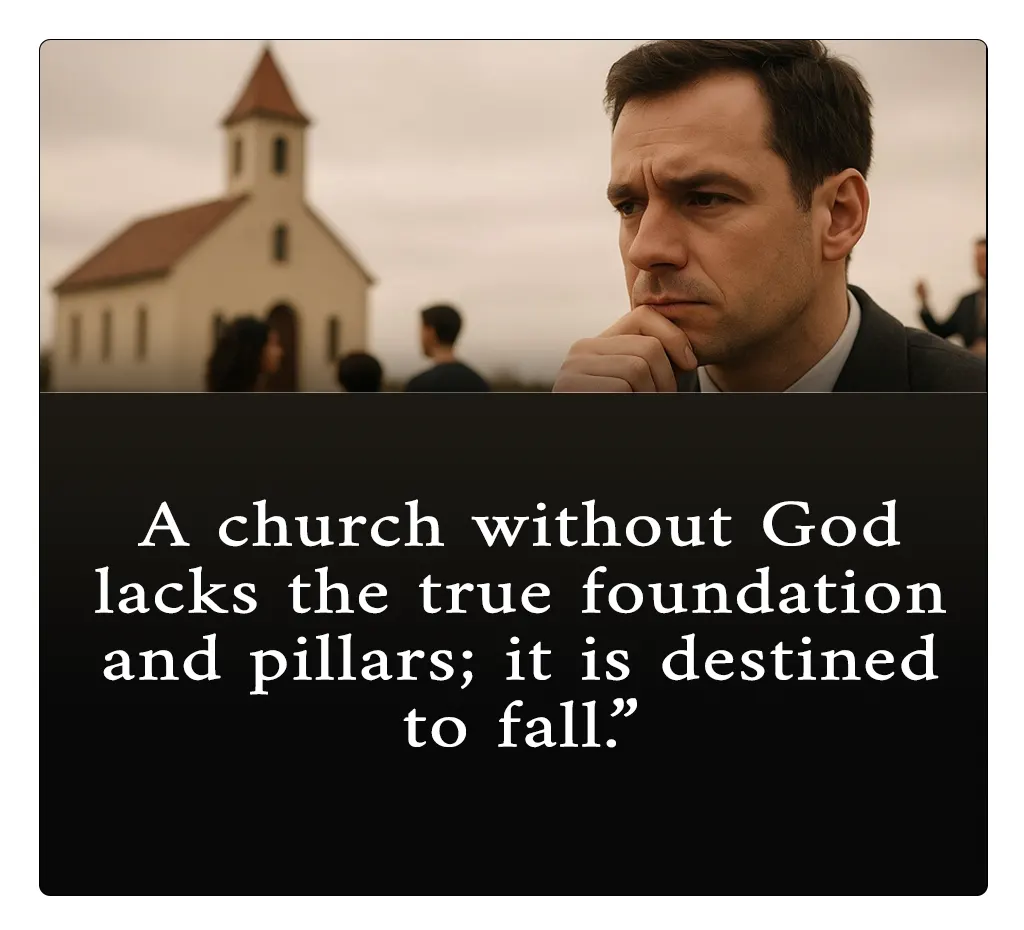
The church is not a building, an institution, or a program. “You also, like living stones, are being built into a spiritual house” (1 Peter 2:5). We are the church.
When we trade obedience for comfort, when we prioritize convenience over calling, we risk becoming a shell of what God intended. But when we remember the mission, seek first His kingdom (Matthew 6:33), and live for His glory, the church becomes what it was always meant to be—a light in the darkness (Matthew 5:14).