The Meaning of Life
Discovering the meaning of life that leads to true life.
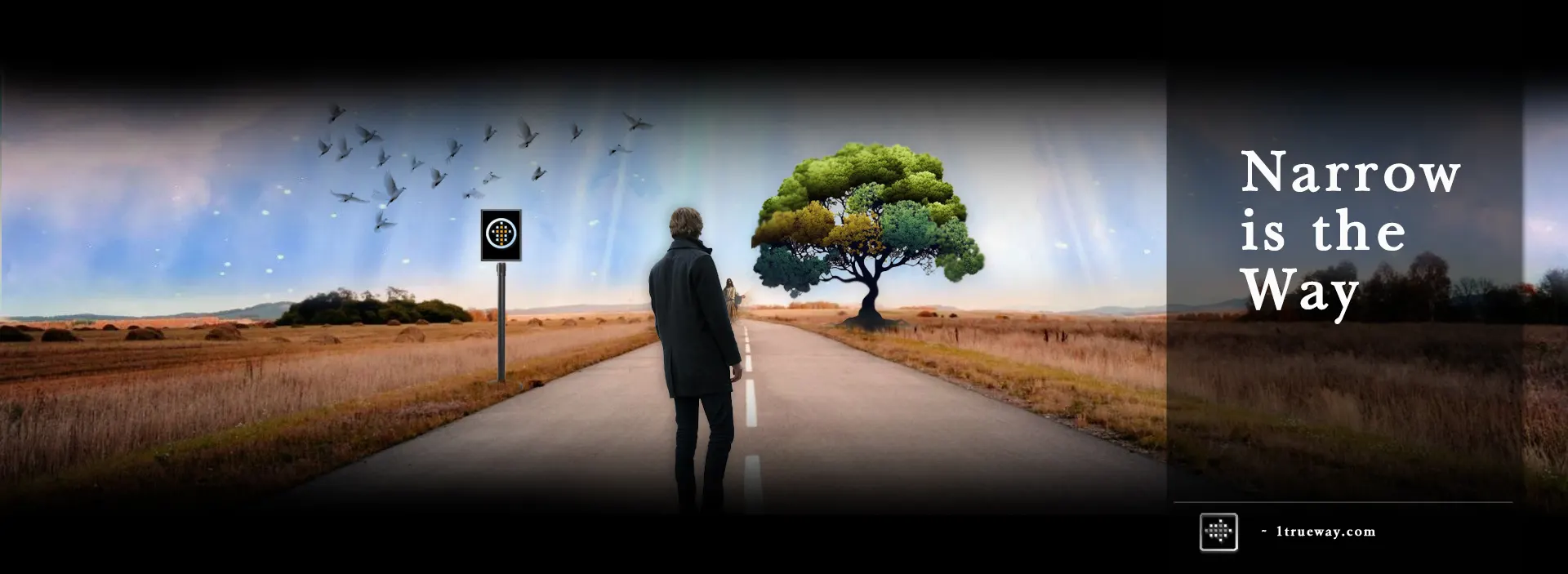
The Search for Meaning

To the young, life appears to stretch endlessly ahead, creating the illusion that time is abundant and disposable. Meaning is treated as something that can be postponed — delayed until the world has been fully tasted, or optimistically discovered through repeated attempts down countless paths.
For those further along the journey, meaning begins to carry more weight. Yet the distance already traveled — along with entrenched habits, past successes, deep wounds, and accumulated failures — makes it difficult to question the path itself, let alone turn back and begin again.
For those nearing the end of the road, meaning becomes urgent. With it comes the sobering realization that the path behind them has yielded only temporary answers, none of which have provided a lasting or true sense of purpose.
Human beings possess a deep longing for happiness, even if it requires self-deception to sustain it. Many pursue a “Disneyland” version of life, willing to shape their choices around the pursuit of moments that promise fulfillment. Graduating, falling in love, getting married, starting a family, securing financial success, acquiring possessions, building a legacy, or celebrating the triumph of a championship — these are often treated as the milestones of happiness.
Yet these are the highlights, not the substance of life. Real life unfolds after the celebration. It is found in what follows achievement: sustaining love beyond initial passion, enduring the demands of marriage and parenthood, maintaining stability amid uncertainty, and slowly realizing that even the legacy we strive to build will eventually fade into distant memory. It is the return to ordinary days after extraordinary moments, hoping once again that the next milestone will provide what the last could not.
The dysfunction of the world reflects the deeper dysfunction within humanity itself. True meaning cannot be grounded in what is temporary. Nothing functions as fully as we intend, peace remains incomplete, and every system we construct bears the marks of limitation and fracture. What emerges is the best that finite humanity can produce — yet it leaves the world characterized by unrest and disorder.
The pursuit of happiness, though natural, can become the very mechanism through which we remain distracted from deeper truth. Fleeting satisfaction keeps us moving from one promise of fulfillment to another, rarely pausing long enough to confront the possibility that meaning cannot be found within the confines of this world alone.
Eventually, every person must face this question. The hope is that it is faced while there is still time to respond.
As King Solomon observed, life “under the sun” is marked by vanity. And as Scripture warns, what does it profit a person to gain the whole world and yet lose their soul? True meaning is found only in God, and it involves far more than the pursuit of comfort, success, or even religious identity.
Humanity was created for something greater — to reflect the character of God, to be shaped into the likeness of Christ, and to participate in purposes that extend beyond the temporary structures of this world.
Whether life has felt like a carefully constructed fantasy or a prolonged struggle, it will ultimately be taken from us. In that moment, a stark reality emerges. If there is no God, then the entirety of human striving leads only to eventual disappearance — one life replacing another in an unending cycle that culminates in nothing lasting.
But if there is a God, then the greater tragedy would be to reach the end of life having never truly understood its meaning. In that realization, the consequences are not merely philosophical — they are eternal.
This section explores true life and its meaning from a biblical perspective, examining how God’s message reveals the purpose and meaning of life.
Discovering the meaning of life that leads to true life.
Who God, Jesus, and the Holy Spirit are, and why they give meaning to life.
Why meaning can't be found in this world.
Exploring why many see faith as irrational—inviting honest, respectful dialogue without fear or judgment.
The real question is: Who was He—and who is He?


If this site has been helpful to you, please consider supporting its continuation with a small donation.
Discover the true meaning of life through God’s Word. This site is for anyone searching beyond the noise of the world. If you have any questions, comments, or concerns, feel free to email us.




