Questions Too Big for Us
The Limits of Our Understanding
“Who is this who darkens counsel By words without knowledge? Now prepare yourself like a man; I will question you, and you shall answer Me.” (Job 38:1–3 NKJV)
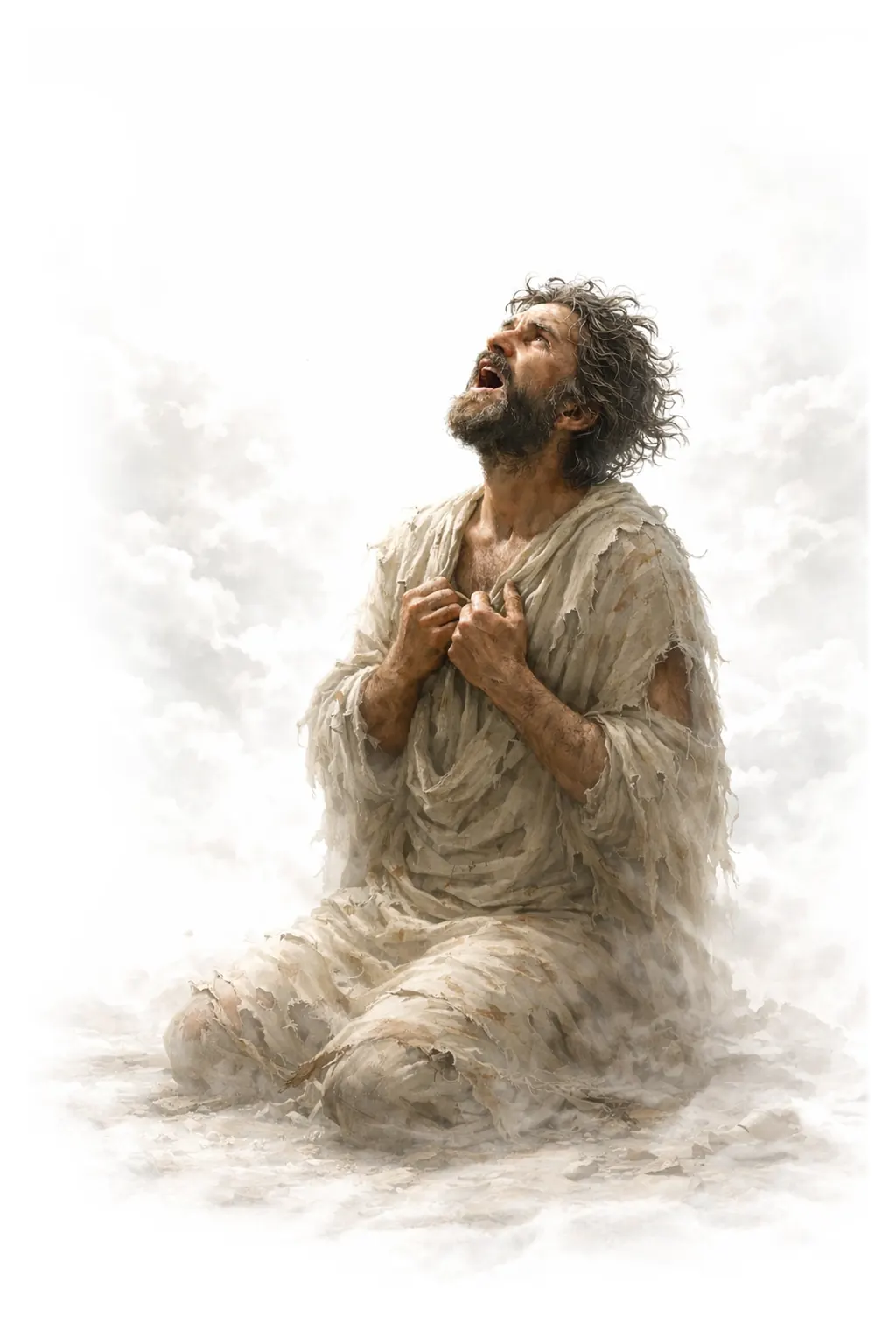
These are the words God spoke to Job after he questioned Him—struggling to understand why he was suffering, why life seemed beyond his control, as if he were merely a puppet on a string. They came in response to Job’s deep anguish and his bitter longing for an answer.
Every person, in one way or another, has stood in this place. We ask God: Why don’t You reveal Yourself? Why don’t You stop the evil? Why do I suffer? Why are there so many religions, opinions, contradictions, errors, and lies? Why say You love us and yet seem hidden? Why did my loved one die? Why did You create me this way? Why did You make the world like this? Both the Christian and the atheist wrestle with these questions.
Questions upon questions—but the deeper question remains: if the answer were given, would we truly be able to understand it? Perhaps God’s response to Job can offer us some insight.
Who Runs the World?
“Where were you when I laid the foundations of the earth? Tell Me, if you have understanding. Who determined its measurements? Surely you know!” (Job 38:4–5 NKJV)
Which of us truly knows what it takes to sustain creation? It is easy to sit back and question, like armchair coaches critiquing a game—but we cannot do that with God. We have no real understanding of what it requires to govern and uphold the world, or to sustain the countless lives that inhabit it. The complexity of creation is far beyond our grasp.
God’s question to Job—and to all of us—is simple yet profound: Where were you when I laid the foundations of the earth? If we were not there when the world was built, how can we claim to know how it should be sustained?
Why This World Exists
We often assume this world exists for our comfort or convenience, but in truth, God created it to point us to Himself and to awaken us—to reveal that life apart from Him is unsustainable and that we cannot live as self-sufficient beings.
Through its trials, challenges, and discomforts, the world confronts us with an essential reality: we need God.
Perfection Required
It takes a perfect Creator to sustain creation; if the Creator were imperfect, the world would eventually unravel and fade away. But who among humans truly understands perfection? What is perfect truth, perfect love, or a perfect mind?
Our understanding of perfection is limited at best. How could we possibly know what it takes to uphold it?
The Weight of Sin
If we cannot fully comprehend perfection, can we truly grasp the weight of sin? We scarcely understand how destructive sin is, or the depth of humanity’s failure. Were we fully aware, we might even attempt to justify our wrongdoing.
Sin is a corrosive force, a cancer that erodes perfection—two cannot coexist. Yet we often fail to recognize what sin truly is, or the profound consequences it brings. Sin brings death.
Death
It’s as if we believe that by ignoring or erasing God, we can somehow escape death. Yet death comes to every one of us, and we often fail to understand it within God’s greater plan.
We see death as terrible—being torn from loved ones, from our lives, from what we hold dear. But death was never meant to be a final horror; it is a transition, a beginning rather than an end. It marks the destination our choices have prepared for us.
Death feels dreadful only because we reject God in favor of earthly comforts—but does that refusal change the inevitable?
God’s Justice and Holiness
Can humanity truly comprehend the cost of rejecting the truth, of turning away from a holy God—the Creator and Sustainer of all things, whose wisdom is beyond our understanding? What is the price of God sending His Son to die for our rebellion?
How can perfect justice coexist with perfect holiness without the world collapsing under its own weight? Look around at the world we live in, and it becomes clear: our understanding is limited, far too dim to grasp the full depth of the justice and holiness required to sustain a perfect world.
How God Awakens and Teaches Us
Justice and Wrath
In the Old Testament, God’s ways were often severe, revealing the deadly consequences of sin and the uncompromising nature of holiness and justice. Humanity sought to live as if the world belonged to them alone, and God allowed it—but in doing so, we brought destruction upon ourselves.
We cried out for rescue, and God revealed the truth: we could never be good enough to walk in perfection, obey every law, or live free from sin and rebellion. In the fullness of time, through the New Testament, God sent Jesus—the only one who could truly save us.
Grace and Mercy
How does God awaken us and teach us the truth? We assume we know how to make a world of people turn from their blind refusal to believe in Him, to stop trying to be their own gods, and to discover the answers to life without God. Yet the reality is far beyond our understanding; God alone can open our eyes and guide us to the truth.
Faith
If we cannot grasp the depth of our rebellion, the weight of our sin, or God’s relentless pursuit to save us from our own blindness, we cannot fully understand why He calls us to faith. Faith is the moment we turn away from the god of self, laying down our limited wisdom, humbling ourselves before the One who knows all, and trusting Him completely.
Faith is the willingness to rely on God, to place our hope in Him, until we are finally united with Him at the end. Faith is the eternal bond that holds us to God.
God’s Kingdom
If we cannot fully comprehend God, how can we hope to understand His coming Kingdom or the priceless invitation it extends? How can we grasp the beauty of the family He is forming—united in heart and mind, living entirely for His glory?
And yet, with such wonder before us, why are we so terrified of death? Who are we to question our Creator and His creation? How can we presume to judge what is just and right? If we cannot even comprehend the complexity of the earth’s formation, how can we presume to judge the moral order?
This leaves us with countless questions: Why is there evil? Why do we die? Does God exist? We ask Him: Why don’t You reveal Yourself? Why don’t You stop the evil? Why do I suffer? Why are there so many religions, opinions, contradictions, errors, and lies? Why say You love us and yet seem hidden? Why did my loved one die? Why did You create me this way? Why did You make the world like this?
God’s answer is simple yet profound: we cannot fully understand. Our task is not to demand every answer but to trust the God who knows them all—knowing that His wisdom, justice, and love surpass everything we can grasp.
In the end, we face a profound dilemma: if God exists, we lack the capacity to question Him; if God does not exist, we lack the capacity to find the ultimate answers ourselves.
Ultimately, we face a choice: to place our trust in God—or to abandon hope.