The Death of Humanity
When you know the Creator, you understand the creation
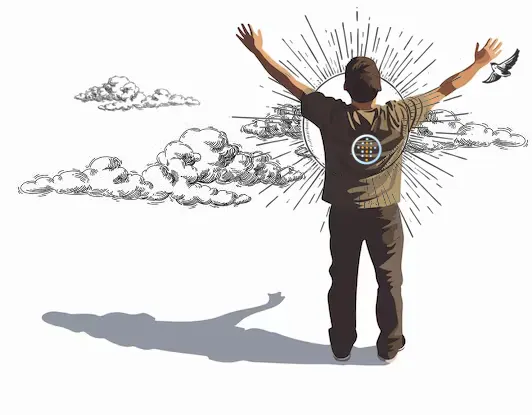
From separation to belonging
God warned Adam and Eve that if they ate from the tree of the knowledge of good and evil, they would die. But what, exactly, died?
“But you must not eat from the tree of the knowledge of good and evil, for when you eat from it you will certainly die.” — Genesis 2:17
Something deeper than physical life was lost in that moment. Their direct connection with God—our Father, Creator, Sustainer, and Giver of life—was broken. Humanity became spiritually separated, losing the intimacy and communion it was created for. The branch was severed from the vine.
“Remain in me, as I also remain in you. No branch can bear fruit by itself.” — John 15:4
From that point forward, we began to live like orphans—children without a Father—trying to navigate life on our own, carrying a weight we were never meant to carry. God, who was once known as near and present, became distant: a thought, a possibility, a mystery rather than the center of reality.
And slowly, something shifted in us. We stopped living for what we were created for. We turned inward, placed ourselves at the center, and began to live as if we were meant to sustain ourselves. But living that way is like trying to quench thirst from an empty cup—it promises life, but it cannot give it.
“My people have committed two sins: They have forsaken me, the spring of living water, and have dug their own cisterns.” — Jeremiah 2:13
In that reversal, everything was turned upside down. God was pushed to the edges of life, and we placed ourselves at the center. And even now, we find ourselves standing before Him in that tension—aware, even if quietly, that something in us is not whole.
I’ve seen something like this before.
In my time serving as a youth minister, I met many children who, for different reasons, were separated from their parents. And no matter how much kindness or care others gave them, there was often still a quiet sense of something missing. Like they were present, but not fully at home in the world around them.
Some had no father or mother at all, and were raised by people who couldn’t—or didn’t want to—step into those roles. Over time, many struggled with trust, identity, and knowing they were loved.
But underneath it all was a longing—for home, for belonging, for someone who truly knew them and would not let them go.
And I can’t help but see a reflection of ourselves in that.
When we are separated from God our Father, something in us is missing. Not just direction, but the kind of love that grounds us. The kind of presence that tells us we are not alone.
“You received the Spirit of adoption by whom we cry, ‘Abba, Father.’” — Romans 8:15
Without Him, we try to become what only He can be for us. And in doing so, we lose the very life we were meant to live.
The result is a kind of spiritual death—not just an ending, but a separation. A life lived apart from the source of life itself. And on our own, we cannot bridge that gap.
“For the wages of sin is death…” — Romans 6:23
But that is not where the story stops.
Because even in our separation, something begins to stir in us—the awareness that we were made for more, and that we cannot save ourselves.
And that is where Jesus enters the story.
Jesus stepped into what we could not fix. He remained fully connected to the Father, living in perfect obedience where we have failed. And then He carried what we could not carry—the weight of our sin and separation. He gave His life so that what was broken could be restored.
“For Christ also suffered once for sins, the righteous for the unrighteous, to bring you to God.” — 1 Peter 3:18
He became the way back home.
“I am the way and the truth and the life. No one comes to the Father except through me.” — John 14:6
And when we trust Him, not just in thought but in surrender, something changes. We are not left outside anymore. We are brought back to the Father. Welcomed. Restored.
No longer orphans. No longer trying to fill what only God can fill.
“See what great love the Father has lavished on us, that we should be called children of God!” — 1 John 3:1
We come home to the One we were made for—God our Father—who meets us not with distance, but with open arms.