
Christianity
The Door to Salvation
The Door to Salvation ↴
Quick Links
Have a Question?
The Door to Salvation
1 of 4 Pages
The Realization
A Step Before Salvation
When and how a person is saved is something only God fully knows. Even I cannot point to an exact moment and say, “That is when it happened.” For years, I thought my salvation began when I said a prayer. But as I look back, I realize that God was opening my eyes to realities I had never truly understood.
I began to see that this world could never give me the life I was looking for. I began to understand that God Himself is life, that I had rejected Him, that sin had separated me from Him, and that my greatest need was not simply to escape hell but to be reconciled to God.
These realizations did not become a formula for salvation. Rather, they began to reveal to me the reality of what salvation actually is.
Before we can truly understand the beauty of the Gospel, we must first begin to see the reality of our condition, the emptiness of the life we have chosen apart from God, and the One from whom we have separated ourselves.
Many people claim to be Christians for reasons that, while common, do not truly define a Christian life. They may believe in God, say a prayer, attend church, grow up in a Christian family, or even read the Bible. Yet none of these, by themselves, make someone a Christian.
The Christian life is something deeper—a new reality. Some parts are non-negotiable essentials, without which there is no life in Christ. Others are marks of that life, signs that God’s Spirit is at work within us. We may struggle in living them out, but they remain the fruit of a heart surrendered to God.
The journey begins with the first step: realization.
Life That Cannot Satisfy
There is a reality about this world that we eventually come to understand: no matter how much we take from it, pour into it, or invest in it, it can never give us sustaining life. It offers nothing more than temporary highs—one after another—yet none of them truly satisfy.
The relationships we have, the success we achieve, the fame we gain, and even the love we attain can never—and were never meant to—fill the empty void within us.
If you find this life completely satisfying, then perhaps you have settled for a shallow facade of what life truly is. In that place, the need for God can become nothing more than an addition to your life—a means of escaping hell—rather than the One your soul was created to know, love, and depend upon.
God is Life
The next reality we must come to understand is that God is life. We were created through Jesus, by Him, and for Him. We were created to know Him, worship Him, and live in relationship with Him.
God is the One who gives us everything we truly need to live: love, care, counsel, knowledge, truth, direction, purpose, and ultimately, an eternal home. Without Him, life will inevitably lack these things. What we seek and attain apart from God may appear to satisfy for a time, but they are ultimately poor substitutes—or, at best, corrupted versions of what God alone was meant to provide.
We are Sinners
We must come to understand that, in rejecting God and choosing to live apart from Him, we committed the greatest of sins. We separated ourselves from Life itself, creating a chasm that brought forth more sin and, ultimately, death.
Like a branch disconnected from the vine, we may still appear to be alive, but we are slowly dying. In separating ourselves from God, we lost everything He alone was meant to provide. We were then left trying to find those things for ourselves—through the world, through other people, and even within ourselves.
We began to define our own love, our own truth, and our own reality. And so, broken and dying people began trying to give one another the life that only God was meant to give.
Judgement
Without God, we must ultimately face the judgment brought upon us by our sin and the death that entered the world through our rebellion. But there is something even more sobering: our sin was not merely a violation of a law; it was a rejection of God Himself. We turned away from the One who created us, fractured the relationship for which we were made, and brought separation into what God intended to be a perfect family.
And yet, the greatest tragedy is that our rebellion came at a cost we could never pay—the death of Jesus Christ on the cross. The One we rejected willingly gave His life to reconcile us back to God.
Prepare the Soil
From Genesis to Revelation, God’s people are pictured as living under oppression. In the Old Testament, they were enslaved by Pharaoh; in the New Testament, under Roman rule. Each time, they longed for deliverance, and God acted—first by sending Moses, then by sending His Son, Jesus (John 3:16).
But notice the difference. Israel’s bondage was obvious—chains, whips, exile. Today, many live in comfort and prosperity, not desperation. Instead of longing for freedom, they fill their lives with work, pleasures, and security.
So when we tell people, “You’ve sinned, you’re going to hell,” or, “You have a God-shaped hole in your heart,” they may respond—but often for the wrong reasons. Some “turn to God” only to secure a ticket to heaven, others only to feel better in this life. The result? A divided life: God for Sundays, the world for Monday through Saturday.
Jesus confronted both mindsets. To those who thought heaven could be earned (like the Pharisees or the rich young ruler), He exposed their idols (Luke 18:18–23). To those who came only for blessings—food, miracles, signs—He spoke hard truths that thinned the crowds (John 6:26–27, 60–66).
Here is the reality: our problem is not emptiness, but death—spiritual death (Ephesians 2:1). We rejected the very One who is life itself (John 14:6). Our rebellion crucified the Lord of glory. And apart from Him, our path leads only to darkness and judgment.
But God. In His mercy, He sent Jesus—not to make this world more comfortable, not just to guarantee heaven later, but to bring us from death to life. Life is not something He gives apart from Himself—He is the life (John 11:25).
Realizing the Cost
When the rich young ruler came to Jesus confident of his goodness, Jesus exposed the cost: “Sell all you have, and follow Me.” (Luke 18:22). The man walked away sorrowful—his possessions owned him more than he owned them.
Others said they were ready to follow, but Jesus warned them to count the cost (Luke 14:25–33). Discipleship means surrendering idols, comforts, even family loyalties. It means placing Him above all else.
Think of marriage. Many love the idea of the wedding and honeymoon but forget that real marriage costs something: your independence, your selfish desires, your “me-first” life. You are no longer one, but two.
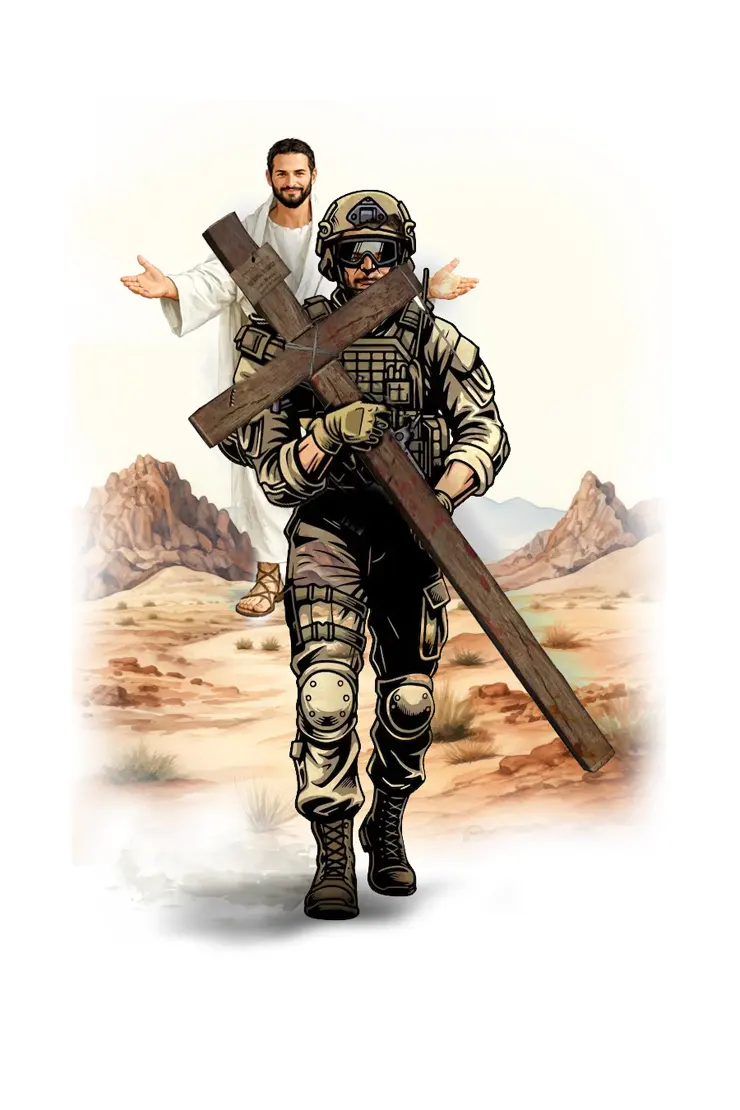
Or think of soldiers. Some enlist out of excitement, but soon discover it costs them freedom, opinions, comfort, even their very lives. Without counting the cost, many fall away.
The same is true with Jesus. Following Him costs everything—our desires, possessions, reputations, even our lives. But in return we gain more than we could imagine: God Himself, eternal life, a true family, a perfect Father, unshakable joy (Philippians 3:7–8).
Realizing the Proposal
Jesus did not come merely to invite us to believe facts—He came with a proposal:
“In Me you see the Kingdom of My Father. Will you leave the fleeting treasures of this world to come home? Will you die to yourself so that you might live? Will you repent of crucifying God’s love, and follow Me?”
Scripture often uses the language of marriage to describe this (Ephesians 5:25–27; Revelation 19:7–9). Imagine a spouse who leaves, realizes their mistake, and comes back seeking forgiveness. If they truly repent, they not only ask for forgiveness—they return home. Without that return, the relationship remains broken.
So it is with Christ. Repentance means more than sorrow. It means turning back, humbly confessing how we’ve wounded Him, and living in renewed devotion.
A Surrendered Heart
At the center of Christianity is a surrendered heart. We acknowledge Jesus as our treasure, our Lord, our life. We no longer live for ourselves, but for Him who died and rose for us (2 Corinthians 5:15).
To refuse surrender is to refuse Him. There is no middle ground: either we live for Christ, or we live for self. Either we accept His proposal, or we walk away.
The Final Question
Jesus has stretched out His hand. The proposal is before you.
If He is truly the love of your life, you will say yes.
Have you?