
Christianity
Examine Yourselves (2 Corinthians 13:5)
Examine Yourselves ↴
Quick Links
Have a Question?
Examine Yourselves
1 of 11 Pages
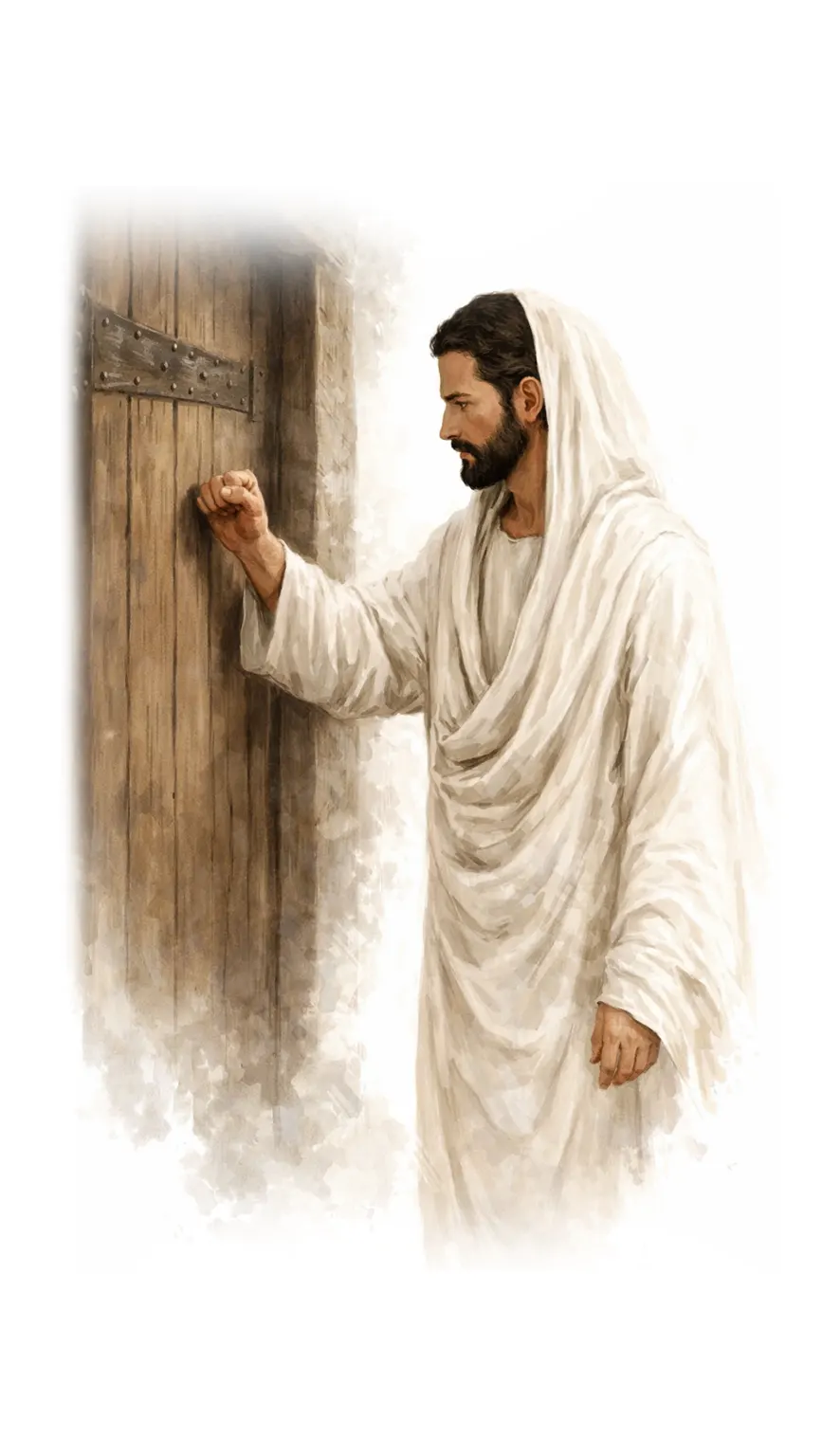
A Personal Encounter with Jesus
A Hard Question for Christians to Answer
Reviving the Light Within: How Christians Can Truly Impact the World
I want to ask a question that may sound like I’m calling Christians out, but that isn’t my intention. My desire is for us to face the truth together—because the truth sets us free (John 8:32). It’s a truth that aligns with God’s design and helps us grow.
If I’m wrong, as Christians we should correct one another with grace and humility (Galatians 6:1). I also recognize that some atheists or non-believers may use this as a reason to dismiss God, but my hope is that both believers and non-believers can see the heart behind what I’m saying.
The Question
The Bible teaches that true Christians will bear fruit—fruit that reflects the character of Christ (John 15:5–8). This is how a believer becomes salt and light in a dark world (Matthew 5:13–16).
Today in America, we have countless theologians, seminary graduates, Bible teachers, preachers, apologists, churches, congregations, small groups, and individuals who claim to study the Bible diligently. Yet with all this knowledge and dedication, I must ask: “Where is the fruit? Where is the light and salt in the world?”
I rarely see people living like those in Acts—selling all they had, coming together, breaking bread, and fully dedicating their lives to God (Acts 2:44–47). I don’t see many forsaking the world for Christ or dying to themselves. I don’t see them boldly and unashamedly declaring the gospel, in word or in life (Romans 1:16).
When I raise this question with pastors and fellow Christians, they say, “Oh, who are you hanging out with?”—dripping with sarcasm, as if the light I’m looking for only exists in their little circle. They insist they’ve seen plenty of light and many lives transformed—and then they usually invite me to their church. But if light can only be found inside church walls, then something is profoundly wrong.
The Light of Christ in the World
Light and salt are proven in the real world—out where darkness reigns and people have lost their taste for God. Thousands of years ago, when Jesus came to earth, His presence sparked curiosity and drew attention. People were eager to hear God’s Word (Luke 4:22). God still works the same way through Christians today: the light we shine is the light of life in Jesus, and it naturally draws notice.
God shines His light so those living in darkness can be awakened from their spiritual slumber (Ephesians 5:8–14). The brighter the light, the greater its power. That light stirs curiosity in those who don’t know God, prompting questions and giving us the opportunity to share His Word. This may draw people closer to Him or push them away, but either way, it is exactly how God reaches the lost.
The Challenge of Modern Evangelism
There is so little light in the world that many churches rely on limited methods to reach the lost. One common approach is simply inviting people to church—but this risks letting the enemy in unnoticed (2 Corinthians 11:14). Another is creating flashy or manipulative strategies to evangelize, which often feel forced and inauthentic. It can come across like we’re car salesmen trying to sell a product we don’t fully believe in.
In my experience preaching to youth, I’ve often heard them say they don’t believe what Christians claim—because they rarely see it lived out at home, in the world, or even within the church. I know Christians are quick to respond with the familiar cliché: “We are sinners; that’s why we need Christ.” There is truth in that, and it explains some of the dim light we see. But when the light is so faint, we have to ask ourselves: have we turned that statement into a convenient excuse rather than a call to real transformation?
We live in a time with more than enough Christian books and Books & Links to dive deeply into God’s Word. We have tools to study every word, punctuation, context, and nuance of Scripture. Yet, if all this knowledge produces only a dim light, then we need to seriously rethink our approach.
Much of this knowledge has instead created prideful people who speak over others, rehearsed and scripted believers who lack genuine love, and individuals who think they know the Bible but fail to live it out (James 1:22–25). We have many hearers—but far too few doers.
Jesus First, Not the Movement
I hear the genuine heart of many pastors and Christians saying, “I want to see people saved, revival come, and multitudes fully surrendered to Jesus, abiding in Him and serving Him wholeheartedly.” It all sounds good, but we must be careful with the word “I.” It can easily make us forget that this is God’s work, not ours (John 6:44).
I am not convinced by a church simply because it has a large crowd. I am not impressed by what appears to be a revival, only to watch it fade. I’ve been in ministry long enough to recognize the patterns: people come in, confess Christ, full of excitement—but the wave inevitably dies down. Then a new wave comes, and the cycle repeats. Meanwhile, the same individuals attend evangelism classes, small groups, and Bible studies—some for 20 years—yet they remain on spiritual milk, never moving into the deeper maturity God intends (Hebrews 5:12–14).
If we think it’s about what we need to do, we miss the truth that transformation must begin with each of us personally. We should desire revival and surrendered lives for ourselves first—Jesus first, not the movement (Matthew 6:33). Our focus should be on seeking the kingdom, not starting a movement. Jesus started a movement thousands of years ago, and our call is simply to be caught up in it.
Dying to Self
We need to be Romans 12 Christians—those who die to themselves, refusing to be conformed to the patterns of this world, but instead are transformed by the renewing of our minds (Romans 12:1–2). In doing so, we can discern and live out the good, acceptable, and perfect will of God. This is how we demonstrate God’s reality to ourselves and to others—and how His light begins to flow through us.
Knowledge is valuable—but without dying to self, it remains mere information, stagnant like a clogged drain. Truths get trapped between the mind and the heart, never reaching the place where they can shine as true light and bear lasting fruit. When we fail to die to ourselves, it’s as if we believe Jesus died on the cross—but never rose again (Romans 6:4).
Unleashing the Light
There is a dim light in the world—and a dim light within me. What we truly need is not more Bible studies, evangelism classes, small groups, or acts of service. What we need is a death to self. We must unplug the drain that quenches the flow of the Spirit, allowing God’s life to move freely through us so we can bear fruit and shine as light (Galatians 5:16–25).
In doing this, we show the world that God not only saves but also resurrects us into new life (2 Corinthians 5:17). This is how we bring Jesus to a darkened world—causing hearts to tremble and stirring the same conviction that ignited the early church in Acts (Acts 2:37).
Being the Light, Not Selling It
Is the world buying this version of Christianity? Maybe—but if people are merely “buying” it, they aren’t being truly transformed by it. We aren’t called to sell a message; we are called to be it—to embody Christ—so that God can work through us and people can respond freely. This is the only way to truly know when someone has been saved (Matthew 7:16–20).
I want to be a truly sold-out Christian. I want more of Jesus. I want the world to see Him through me—in every word, every action, everywhere I go—because I know that is what makes a real difference, both for me and for those around me. This is how God intended it to be.
It’s easy to say that Christ gives us life; it’s far harder to be that life. We may know every Scripture, master every argument, and win every debate—but without Christ fully alive and empowered in us, we lack love. Without Him, all we are is clanging symbols, and no one is being drawn to believe (1 Corinthians 13:1–3). We can offer all the excuses we want as Christians, but in the end, we have to be honest: are you truly dying to self so that Christ can live in and through you—or not?